
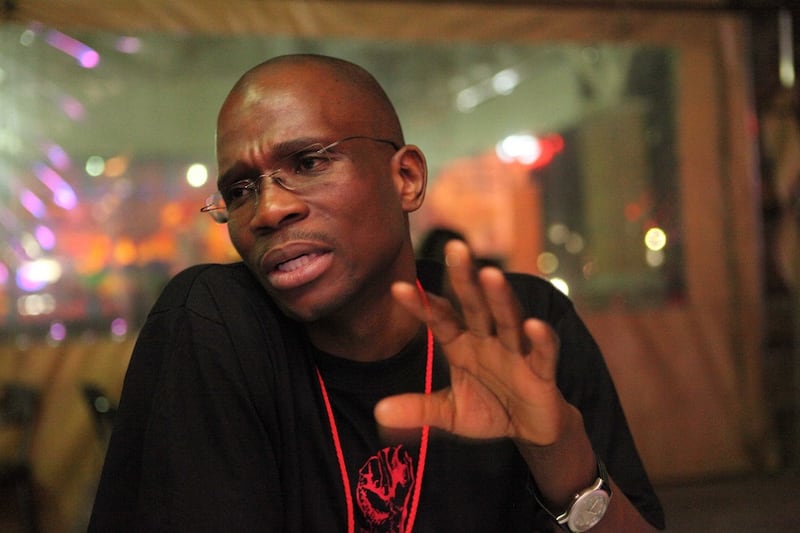
At 2am on the day I was due to interview David Masondo, SA’s new deputy finance minister, he sent me a 3,000-word e-mail with notes in answer to the questions I had said I would like to ask.
The questions were sent as broad pointers for the Treasury staff as a formality, but Masondo made sure he considered each one and answered in detail.
“I felt like I had just written an exam,” he said, when we met at the SA Revenue Service office in Menlyn this week, where he was squeezing in interviews between diary commitments. In the hour to come, though, there was still a greater inquisition to follow. Masondo answered it all — from the viability of subsidies for industry to the relevance of Marxism today — with a disarming honesty, clarity and openness that has become unfamiliar in the ranks of ANC leaders.
Masondo is one of those black South Africans who has risen, through the sheer force of his intellect and determination, above his beginnings.
In the past decade, anti-intellectualism has stamped itself on the ANC. It was not only because Jacob Zuma derided “clever blacks” and because he appointed people like himself to high office, but the young intellectuals who might have made up the ranks of the ANC defected to the EFF, where higher education is genuinely admired. Masondo, who comes from Limpopo, was close to the EFF crowd and who at the time of the breakaway expressed many of the same political ideas, is an outlier in the ANC. He is different.
For instance, he has a PhD from New York University on industrial policy and investment in the SA automotive industry and an MA from Wits on a similar topic. He also did a teaching stint at Wits on political economy. He has held positions in government — he was MEC for finance in Limpopo during the heyday of EFF leader Julius Malema — and in the public sector, where he was CEO of the Gauteng Automotive Industry Development Centre.
Immediately on meeting him it becomes clear that Masondo, who was born in 1974 and grew up and went to school in the villages of Limpopo, is one of those black South Africans who has risen, through the sheer force of his intellect and determination, above his beginnings.
It should come as no surprise, then, that it was ANC and SACP politics that provided a platform for his intellectual development. He was student representative council president at Giyani College of Education and at Wits, and is a committed Marxist.
“Marxism, as a scientific way of looking at society, is still relevant. Marxism provides conceptual tools for us to engage with the existing world. For instance, while [Karl] Marx did not invent the concept of class, using the Marxian conception of a class which is defined in terms of what people do in order to get an income, which is determined by what they own, you will be in a position to understand why poor people are poor. They are poor because they depend on selling their labour power to employers.
“What Marxism helps me with, in my current job, is to see that short of socialism, which is not possible right now, what you need to do is secure some kind of developmental outcome.”
What Marxism helps me with, in my current job, is to see that short of socialism, which is not possible right now, what you need to do is secure some kind of developmental outcome
While class analysis has led the more old-fashioned or romantic Marxists to conclude that this requires class revolution, Masondo argues that class analysis puts capitalist investment at the centre of economic welfare. Without investment, the government cannot raise taxes and workers cannot get wages. Most importantly, without investment there can be no economic growth. Encouraging faster-growing investment to boost the demand for employment is “the most critical intervention” the government can make, he says.
“Where we are now, socialism is not on the agenda, [but] the concept of the developmental state [is] useful. You are not overthrowing capitalism; you are basically saying [that] in the context of a country that is underdeveloped, the developmental state is necessary to catch up in terms of industrialisation.”
Many in business will no doubt roll their eyes at this formulation. The developmental state, which now can no longer provide electricity or water with certainty, has been an abject failure. It is idealistic to think that the economy can be led by state interventionism, and fixed by trading subsidies for business with requirements to meet social goals.
However, Masondo has a pragmatic view of what a developmental state could do to incentivise business and private investment, increase competitiveness and integrate SA companies into global value chains.
“The developmental state has two features: discipline and subsidies. You discipline or cajole business by saying we will provide subsidies for certain developmental outcomes.”
The star of the show has, of course, been SA’s automotive incentive programme, which though enormously successful in creating and maintaining manufacturing capacity, has come at a price to both the state and the consumer. In his state of the nation address, President Cyril Ramaphosa spoke of replicating the programme in other manufacturing sectors.
“The auto sector had a clear industrial policy; in that policy programme business, labour and government agreed on their collective responsibilities and roles. What we have learnt from the automotive sector is that where you have social actors working together, identifying constraints and agreeing on what each must do, success is possible.
“This is replicable in other sectors. The question would be [what is] the size of the subsidy and the cost? We would have to think about the level of subsidy possible. But that said, you might not need to provide subsidies. Maybe what is needed in some sectors is to deal with basic things like water and electricity supply,” Masondo says.
This approach is a good fit with the Public Private Growth Initiative based in the presidency, a sector-specific plan that aims to unblock constraints to investment and growth.
In a similar vein to communists who went before him in the finance ministry, such as Jabu Moleketi, who served in Thabo Mbeki’s administration, Masondo is a realist when it comes to public finances.
Moleketi, soon to be one of the new owners of Business Day, was finance MEC for Gauteng when the growth, employment and redistribution programme was implemented and had to preside over severely constrained social spending at a time when social expectations were very high.
Masondo has a brave approach. “Our state debt levels are unacceptably high,” he wrote in his notes to me.
“Raising tax and more borrowing are not viable. Further borrowing raises debt service costs, which then squeeze out other spending. Unfortunately, debt service costs take up R11 of every R100 government spends — the same amount we spend on community development, and almost the same as health.
“We have to reprioritise expenditure. Our fiscal situation is unsustainable, including state-owned companies like Eskom requesting further bailouts. Without decisive action, debt-to-GDP may rise above 70%. We cannot continue bailing out Eskom, we have to cut somewhere.”
While the Treasury put an expenditure ceiling in place several years ago, making real cuts to consumption expenditure is something the ANC government in more recent years has been unable to do. The reprioritisation of the past few years has already compressed infrastructure spending that would have been helpful for growth.
Masondo has not yet had the opportunity to put his sentiments on reining in public finance into practice. The reality of cutting departmental budgets and contemplating the social consequences that could arise will be quite different to a theoretical discussion. It will be enormously difficult to persuade ANC ministers — who have not yet adapted their mindsets to SA’s fiscal reality — to take short-term pain in the hope of long-term gain.
This task will, of course, fall mainly to finance minister Tito Mboweni and the minister’s committee on the budget. Mboweni has amply demonstrated that he has scant regard for the pet projects and sensibilities of his cabinet colleagues and is going to drive a hard bargain. In that process, he will find a ready ally in his determined and hard-working deputy.
Cabinet colleagues should start worrying. It is going to be a fascinating wait-and-see.


Would you like to comment on this article?
Sign up (it's quick and free) or sign in now.
Please read our Comment Policy before commenting.