

THE World Economic Forum’s Global Competitiveness index for 2015-2016 ranks 140 countries for the quality of their maths and science education.
SA is last.
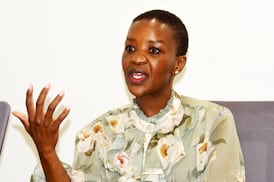
"SA is one of the most unequal countries in the world. One of the ways this plays out is the huge disparity in academic achievement in maths and science between well-and under-resourced schools," says Joy Olivier, founder and director of IkamvaYouth.
"Without equipping learners from low-income areas to excel in maths and science, we are not only haemorrhaging much-needed talent, but ensuring the perpetuation of unequal access to high-paying careers."
Because maths and science education provides critical skills for a range of jobs, Olivier believes that a steady flow of learners eligible for engineering, the sciences, or business degrees is essential for SA’s ability to innovate and to build its economy. But, as was the case with the recent visa regulations, many well-intentioned government policies have had unintended negative consequences, she says.
"It’s at the level of implementation that education in this country fails most spectacularly," Olivier says.
"This is mostly due to a lack of accountability.
"Furthermore, apartheid ensured that generations of parents and teachers were systematically undereducated, and created pervasively low levels of expectation for black learners’ academic achievement levels.
"Until South Africans can significantly raise our expectations of each other, we will continue to be behind in this area. And until real accountability mechanisms are embedded into the education system at every level, we will struggle to reform."
Another challenge is the problem of teacher-to-pupil ratios, which Olivier explains can be as low as 1:12 at a private school and as high as 1:60 at a township school. As the teaching population ages and the system struggles to attract new educators, "huge gaps" in knowledge lead to learners lacking fundamental understanding in subjects that require core knowledge before they can progress.
"Due to huge class sizes and pressure to get through the curriculum, there isn’t enough time to go back to the basics," Olivier says.
"In order to reduce class sizes to the point where it would have an impact on learner achievement, we would need to spend 1%-2% of GDP (gross domestic product), which isn’t feasible." And so learners are just "progressed", she says.
...
ALONG the way, they lose their confidence and fall out of love with learning. It is only through much individual attention and care that this can be overcome.
Olivier began working with fellow Human Sciences Research Council researcher Makhosi Gogwana, examining how science, technology, innovation, and research and development boost economic development.
This led to the idea of a programme where university students and graduates, rather than existing teachers, work with learners.
"Young, naive and optimistic, we set off to Makhosi’s former school in Khayelitsha to begin tutoring on Saturdays," Olivier recalls. "Of the first cohort of matrics, 100% passed, and 60% got into tertiary (institutions). When those ex-learners said they wanted to become tutors, the IkamvaYouth model of paying it forward was born," she says.
Since its launch in 2003, the programme has grown into a national nonprofit organisation operating in five provinces and working with more than 2,000 learners this year.
A recent evaluation by Stellenbosch University stated the IkamvaYouth programme is associated with dramatic improvements ranging from 6% for Physical Sciences up to a high of 10% for Life Sciences — a 5% difference in scores is about a year of learning.
"Learners need bucket loads of individual attention, because they are lacking in the basic fundamentals, and that is why the IkamvaYouth model is so effective," Olivier says.
"And it’s thanks to our incredible donors that we have been able to get this far. The largest of these is Amalgamated Beverage Industries, to whom we are extremely grateful, as they have funded our expansion into new provinces."
...
LAST year, the "Ikamavanites" succeeded against the odds: 80% passed matric (compared to the 71% national average), 69% were eligible for tertiary study (compared to 55% nationally) and 40% qualified to study for a bachelor’s degree at university (compared to 26% across SA).
"I learnt so much," Olivier says. "I have learnt how committed the learners are, and the huge impact that just a bit of time and attention can make.
"I have learnt about the power of peer-to-peer learning and how powerful it is for a learner to be tutored or mentored by someone from their own community.
"But most of all I have learnt that when things seem impossible, there is usually a way around it."
Olivier describes each of the almost 1,000 learners who have graduated from high school with the support of IkamvaYouth as a success story.
"The next generation of leaders are crazy smart, unapologetic, and committed to making things work," Olivier says. "They are the opposite of apathetic and they have the kind of power that we need to make things change in SA."

Would you like to comment on this article?
Sign up (it's quick and free) or sign in now.
Please read our Comment Policy before commenting.