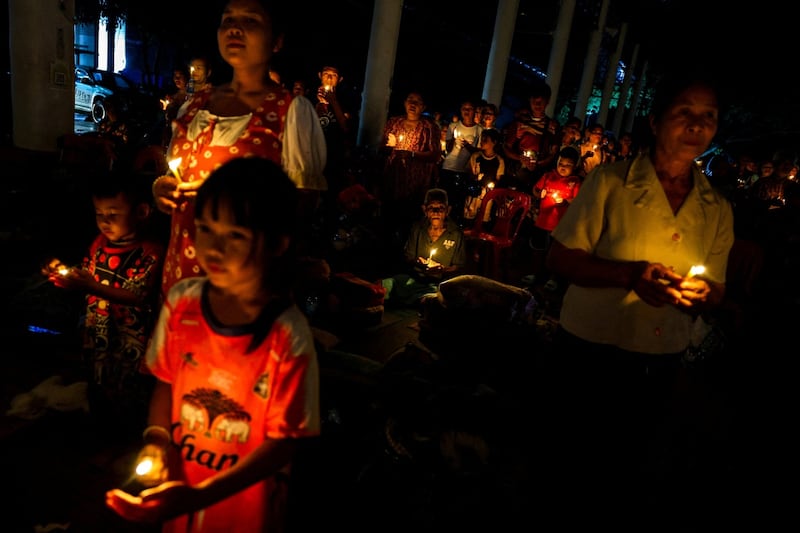
Putrajaya, Malaysia — Cambodia and Thailand agreed to an “immediate and unconditional ceasefire” from midnight (5pm GMT) on Monday, in a bid to halt their deadliest conflict in more than a decade after five days of fierce fighting that has displaced more than 300,000 people.
After days of efforts by Malaysia, chair of the Association of Southeast Asian Nations (ASEAN) regional bloc, the US and China to bring both sides to the table, the two countries’ leaders agreed to end hostilities, resume direct communications and create a mechanism to implement the truce.
At least 36 people have been killed in the fighting, mostly civilians.
After more than two hours of talks at his official residence in Putrajaya, Malaysian Prime Minister Anwar Ibrahim, flanked by Thai and Cambodian leaders, said he was ready to deploy a team to observe and ensure implementation.
“This is a vital first step towards de-escalation and the restoration of peace and security,” he told a press conference. “All parties shared a commitment to peace.”
Territorial dispute
The Southeast Asian neighbours have wrangled for decades over border territory and have been on a conflict footing since the killing of a Cambodian soldier in a skirmish late in May, which led to a troop build-up on both sides. A full-blown diplomatic crisis brought Thailand’s fragile coalition government to the brink of collapse.
They accuse each other of starting the fighting last week, both quickly deploying heavy artillery at multiple points along their 800km land border. Thailand flew air raids with an F-16 fighter jet.
US President Donald Trump called both leaders at the weekend, warning he would not conclude trade deals with them unless they ended the fighting. Both sides are facing a steep import tariff of 36% on their goods in the US, their top export market.
Cambodian Prime Minister Hun Manet thanked his acting Thai counterpart, Phumtham Wechayachai, for what he said was a positive role and said he deeply appreciated Trump’s “decisive mediation” and China’s constructive participation.
“We agreed that the fighting will stop immediately,” he said, expressing confidence that both sides could rebuild trust and confidence.
“The solutions proposed by Prime Minister Anwar will set the conditions for moving forward with bilateral discussions, returning to normalcy, and forming the foundation for future de-escalation.”
Landmines
Responding to the ceasefire, White House spokesperson Karoline Leavitt said Trump “made this happen”.
“Give him the Nobel peace prize!” Leavitt posted on X.
Tensions boiled over last week after Thailand recalled its ambassador to Phnom Penh and expelled Cambodia’s envoy, in response to a second Thai soldier losing a limb to a landmine that Bangkok alleged Cambodian troops had recently laid.
Cambodia has strongly denied the charge, as well as Thai accusations that it has fired at civilian targets including schools and hospitals.
Hun Manet last week accused Thailand of “unprovoked and premeditated military aggression”.
Mistrust
Phumtham, who had expressed doubts about Cambodia’s sincerity, said Bangkok had agreed to a ceasefire that would be “carried out successfully in good faith by both sides”.
“Today’s outcome reflects Thailand’s desire for peaceful resolution by continuing to protect our sovereignty and the life of our people,” he said, thanking Trump and Malaysia.
The fighting has scarred border communities on both sides.
Amid the din of occasional artillery fire, homes and shops remained shut and a four-lane road was deserted except for a few cars and military vehicles.
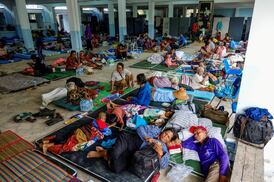
Dozens of displaced residents quietly lined up for their evening meal at an evacuation centre about 40km away from the front lines. A few children played with dogs, others swept the dusty floor.
Nong Ngarmsri just wants to go back to her village. “I want to go to my children who stayed back,” she said. “I want them to cease firing so that I can go home.”
Reuters





Would you like to comment on this article?
Sign up (it's quick and free) or sign in now.
Please read our Comment Policy before commenting.