Paris — The French government’s 2026 budget plans are based on rosy economic assumptions and its belt-tightening measures may fall short, or never even take shape if the new administration collapses, according to the country’s independent fiscal watchdog.
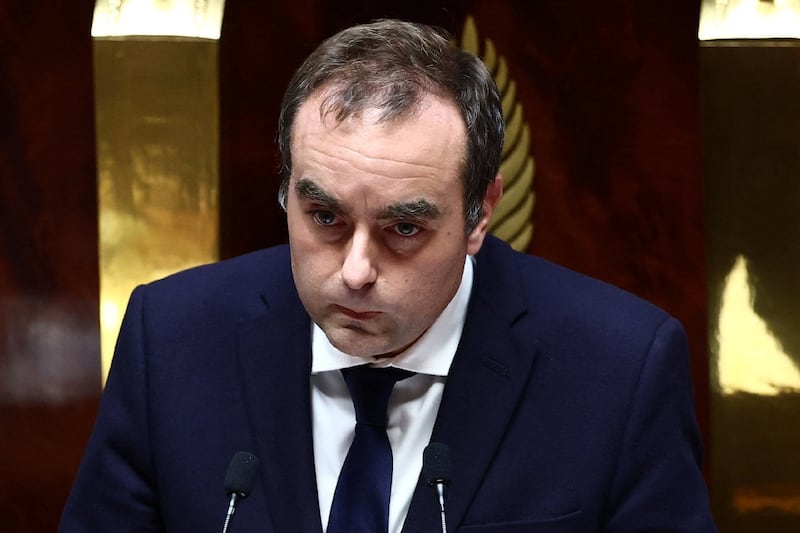
Prime Minister Sebastien Lecornu, reappointed on Friday having resigned at the start of last week, presented a 2026 budget bill to parliament on Tuesday while facing the prospect of a no-confidence vote if his leftist opponents cannot stomach his budget plans.
With the risk premium on French bonds high and credit ratings under pressure, financial markets are increasingly sensitive to the political turmoil as it makes the prospect of France getting its fiscal house in order seem remote.
The eurozone’s second-largest economy has a budget deficit nearly double the EU’s 3% limit last year and a debt-to-GDP ratio heading towards 118%, the third-highest in the EU after Greece and Italy, according to Eurostat.
President Emmanuel Macron has tasked five prime ministers in less than two years with reducing the deficit, the widest in the eurozone, to get the country’s public finances back on an even keel.
But having lost control of parliament, and with opposition parties vehemently opposing his budget plans, Macron’s prime ministers have been toppled one after another.
Lecornu’s budget, already submitted to fiscal watchdog Haut Conseil des Finances Publiques for review, aims to narrow the deficit to 4.7%-5% of GDP, a modest improvement from this year’s 5.4%, it said on Tuesday.
The plan hinges on a more than €30bn budget squeeze, including cuts to corporate tax breaks, tighter rules on social welfare contributions and new levies such as a small parcel tax and an exceptional surtax on complementary health insurers, the Haut Conseil said.
It also clamps down on the taxation of holding companies used by wealthy people to lower their tax bills, stopping short of a 2% tax on wealth over €100m demanded by the Socialists.
“Overall, the public balance forecast for 2026 submitted to the Haut Conseil is weakened by an optimistic economic scenario and, more importantly, by the risk that the projected revenue and savings measures may be underdelivered — or may simply not materialise at all,” it said.
The government forecasts the economy will grow 1% next year, which the watchdog said was based on stronger private demand despite tougher belt-tightening. The watchdog does not issue its own forecasts.
The budget squeeze, equivalent to 1% of GDP, is made up of €17bn in spending cuts and nearly €14bn in new taxes, the Haut Conseil said.
Reuters





Would you like to comment on this article?
Sign up (it's quick and free) or sign in now.
Please read our Comment Policy before commenting.