
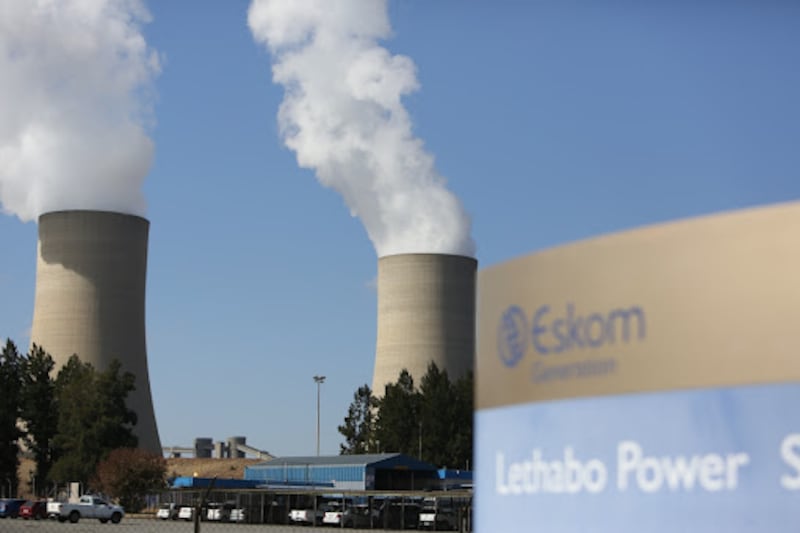
Eskom has always been the 800-pound gorilla in the room: it does whatever it wants, and the rest of us bear the cost.
Its power appears in escalating tariffs, raising its revenues from 1.9% of GDP in 2008 to 4.6% now, despite a 20% fall in its electricity sales. Now it has hatched a plan to increase its revenues further by selling cut-price electricity to energy-intensive users. That proposal poses serious risks for the country.
Under the new plan Eskom will sell electricity at a third of the average tariff to energy-intensive users, providing an extraordinarily low rate by international standards. It hopes to increase its electricity sales to new data centres and bitcoin mines to 7.5% of total grid electricity, with a similar amount going to metal refineries.
For South Africa, success would bring investments and exports, but not jobs. As a group, the metal refineries have long generated just more than 0.5% of total employment, or about 100,000 jobs. For their part, the proposed data centres as a group are likely to create fewer than 10,000 new positions. That is not a path to inclusive growth.
The new strategy promises strategic benefits for Eskom. It would:
- Help pay for fixed off-take agreements with coal suppliers. Declining demand for grid electricity means Eskom now pays for coal it does not need.
- Let Eskom justify operating its older coal plants beyond their planned closure in 2030.
- Secure Eskom’s near-monopoly in the electricity market for the foreseeable future.
But Eskom’s new plan externalises the following extraordinary risks and costs onto the rest of the economy:
- The proposals rely on a finding by the new grid operator that it will have 2GW of excess capacity until March 2027. The operator attaches a high degree of uncertainty to this forecast. Yet, Eskom plans to add 4.3GW in demand by 2029, more than the putative excess supply this year.
- Data centres are the epicentre of the hype cycle about AI. In the medium term the risk of global overbuild is high. Luring enormous new investments with the promise of cheap electricity risks aggravating the local fall-out when the international hype cycle bursts. AI is likely to bring real benefits in the long run, and South Africa could probably use more data centres. But creating a hothouse by promising ultracheap electricity risks exposing the country to the worst of the current financial uncertainty.
- Eskom’s old power plants were built 50 years ago. Eskom says they have recovered from the dark days of 2023, but they have nonetheless reached their sell-by date. Moreover, Eskom is ignoring the economic and healthcare costs of the older plants’ heavy pollution and climate-changing emissions. It acknowledges that they cannot meet current environmental standards. That’s why it made a deal with regulators to close them by 2030 rather than retrofitting them. Now it wants to extend the exemption. Running Eskom’s older plants longer and harder may save Eskom from writing off its older assets. But it poses three risks for South Africa: rising breakdowns in generation that could lead to an electricity shortage; higher pollution across the highveld; and exposure to other countries’ carbon taxes on our exports.
Meanwhile, emissions per million rand of GDP in South Africa are twice as high as the norm for upper-middle-income countries.
Ultimately, Eskom’s plan will entrench its monopoly power. That will deepen the fundamental contradiction in South Africa’s current electricity strategy, which centres on establishing a market system for the grid. But market mechanisms and competitive pricing policies rarely suffice to control a state-owned monopoly like Eskom.
In this context Eskom seems intent on bolstering its market share rather than helping to secure cheaper, cleaner, more reliable energy for the national grid.
• Makgetla is a senior researcher with Trade & Industrial Policy Strategies.
Business Day






Would you like to comment on this article?
Sign up (it's quick and free) or sign in now.
Please read our Comment Policy before commenting.