Anyone who has seen Damien Chazelle’s recent epic Babylon will have been reminded that once upon a time, in its earliest days, Hollywood was a much racier place on and off screen than you may think.
To bring the moral corruption of Tinsel Town under control, the president of the Motion Pictures Producers and Distributors of America, William H Hays, introduced a code that became known as the Hays Code, and which sought to regulate the portrayal of sex, violence, profanity and other morally dubious actions in the movies, by essentially deciding what was acceptable and forcing films, which wished to get certification for distribution to adhere to its rules.
The Hays Code was the arbiter of morality in Hollywood from its introduction in 1934 until 1968, when a new generation of American filmmakers, gave it the finger and relegated it to the dustbin of history, much as their angry, anti-Vietnam War audiences were doing to the stuffy moral codes of their parents on the streets.
There’s been a resurrection of the Hays Code in online debate in recent years, where — much to the exasperation and bewilderment of everyone — mostly, younger, Gen Z film fans have been decrying what they claim is a present-day film and television landscape, littered with far too much sex and titillation.
if Badgley believes that sex scenes are a threat to his marriage, then he’s forgotten that make-believe is part of the job
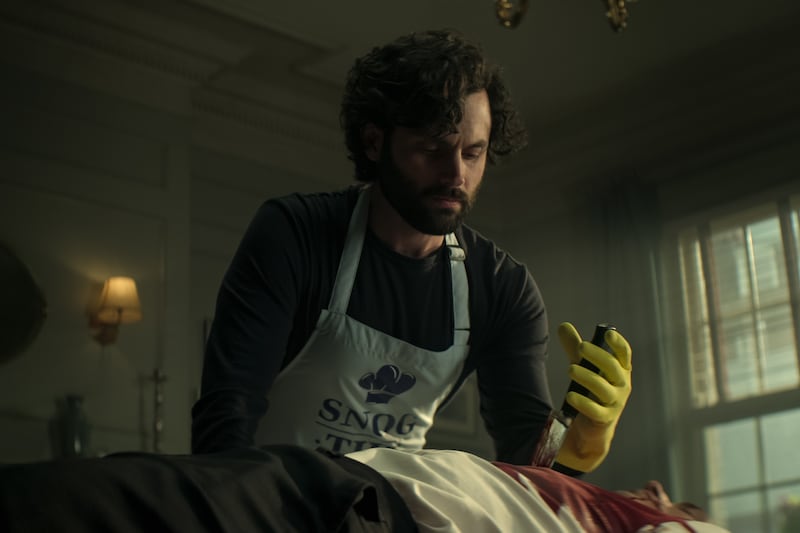
Recent comments by actor Penn Badgley, star of the tamely erotic Netflix melodrama You, in which he plays a ruthless murdering serial killer, have only helped add fire to the flames, if not the loins of Gen Z tweeters. In a podcast interview, Badgley said that he had decided not to do sex scenes any more because apparently these fantasy acts make him feel as if he’s been unfaithful to his real-life wife. He approached the showrunner of You with his concern and she, dutifully reduced the amount of sex in the just released fourth season of the show.
Quite frankly, if Badgley honestly believes that the sex scenes on his show are a threat to his marriage, then perhaps he’s forgotten that make-believe is one of the fundamental principles of his job, but he’s been hailed as a hero by online twits who have looked back to Hollywood history and praised the sexless era of the Hays Code as worthy of emulation.
Others have cited the film industry’s admittedly dodgy history of consent and misogyny as ammunition for a call to pretty much do away with sex in the modern movie universe. Bernardo Bertolucci and Marlon Brando’s decision not to tell Maria Schneider what they were planning to do with the butter in the infamous scene in the 1970s erotic drama Last Tango in Paris is an oft-cited prime example of this kind of problematic attitude. But to be clear, the sex in You and even in the much overhyped and titillated for publicity purposes Fifty Shades of Grey franchise is meek when judged within the context of the overall history of the movies.
What’s surprising is that the calls for a sexing down of pop culture are coming from a generation raised on easily accessible and proliferate internet pornography who you might have thought would have been more inclined to complain about the timidity of sex scenes, rather than their amount. Whereas the erotic thrillers of the late 1980s and ’90s — such as Body Heat, Fatal Attraction and 9 ½ Weeks — and the abundance of saucy adverts on television, gave credence to the adage that “sex sells,” now it seems that to appeal to the youth demographic, you better be sure to have everyone button up and not mention the s word.
Not for the first time in recent pop culture debates it seems as if Gen Z’s supposed access to information and history, hasn’t made them better informed but rather shown them to be myopically ignorant and too willing to emotionally tweet before intelligently considering. Conflating the issue of how sex scenes are created and executed with their inclusion in series where they often serve important storytelling purposes is ridiculous but predictable.
As some commentators have already pointed out, if the movies are a space for the enaction and exploration of the desires and fantasies of human beings, then calls for the elimination of sex from this space, could be interpreted as worryingly puritanical, archly conservative calls for the removal of sex from a consideration of desire that hark back to the closeted fascism of the Dark Ages. Gen Zers aren’t exactly Republicans or Tories when it comes to other important social issues but in their reaction to this subject, they’ve suddenly become the online equivalents of 1980s conservative moral crusaders like Jerry Falwell. Maybe the problem is that because of the volume and availability of pornography in their day-to-day to environment, Gen-Z just aren’t really having that much sex because they’ve accepted that the fantasy offered by porn is always going to be better, or at least far less complicated, than the real thing.
Whatever the reasons, and I’m sure that they’ll be loudly reasserted in capital letters on social media in the coming weeks, the truth is that sex scenes are an indelible part of our storytelling universe, and they were hard fought for, in an era when the prudish tastes of an out of touch grouch were allowed to dictate what adults were allowed to see on-screen for decades.
For those who don’t want to see anything that might offend their young, easily outraged eyes — there are a plenty of sexless superhero films and a library of thousands of films from the “good, old,” morally upstanding days of Hollywood to keep them occupied well into their old age. For a future looking generation, they sure seem to be very nostalgic for the past — another country, where people did things differently, and thankfully, with their clothes on.



Would you like to comment on this article?
Sign up (it's quick and free) or sign in now.
Please read our Comment Policy before commenting.