
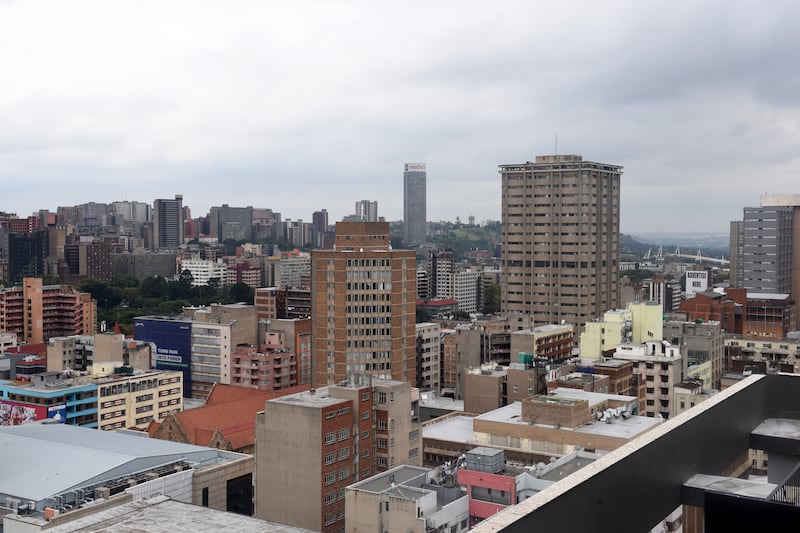
Johannesburg faces a management crisis that will not be fixed until the next local government running the city puts capable people in charge of its institutions.
At the top of municipal entities and departments in the city — which has about 35,000 employees — political allegiance has generally taken precedence over the skills and experience required for the job, independent policy analysis and advocacy organisation the Centre for Development and Enterprise (CDE) says in a new report.
“The city’s management crisis is severe. Since 2016 Johannesburg has had nine mayors and eight coalition administrations,” says the report, the third in a series it is publishing on the country’s economic hub.
For example, none of the board members of Johannesburg Water — which faces an infrastructure renewal backlog of more than R26.6bn — are professionally qualified engineers, while at least seven of the city’s 24 most senior management positions are occupied by acting appointees.
Johannesburg’s own annual reports point to persistent vacancies among engineers, finance professionals, ICT specialists, project managers and supply chain experts.
The report draws on a specially commissioned study on the city by Ivor Chipkin, co-founder and director of the New South Institute, and also draws on the CDE’s 2024 report, published just after the country’s national and provincial elections.
It says a key factor underpinning Johannesburg’s governance crisis is the political instability the city has experienced since 2016, when it last saw a single party have a majority in council.
During the decade, it has had nine mayors and eight coalition administrations, each bringing their own priorities for the city and disrupting long-term planning.
Read: ANN BERNSTEIN | Rising tariffs cannot fix Joburg’s finances
Last month, finance minister Enoch Godongwana told Business Day the business sector had pledged resources to support government efforts to address the financial and governance crisis in Johannesburg, which accounts for about 16% of national GDP.
The pledge came after business leaders in June called on President Cyril Ramaphosa and the national government to intervene in the city’s crisis.
In addition to potholed roads and erratic water supply in some parts of the city due to dilapidated infrastructure, residents often experience waste going uncollected sometimes for weeks due to financial, labour and other woes at waste-collection utility Pikitup.
The metro was also one of 69 municipalities whose funding the National Treasury temporarily withheld in July over its continued failure to comply with the Municipal Finance Management Act, before relenting to disburse the money over fears that service delivery would suffer.
Johannesburg’s governance problems predate the onset of coalition politics, the CDE report says, citing a key problem as the practice of so-called cadre deployment that has been deeply entrenched in the city’s entities and administration, resulting in the political appointments of often unqualified people to key positions.
It urges political parties contesting the November 4 municipal elections to commit publicly to transparent, competitive appointments based on competence, experience and integrity — and to keeping political office-bearers out of procurement, appointments and operational decisions.
“It is vital that Johannesburg breaks the link between political change and administrative appointments. Senior appointments and board positions cannot continue to be treated as political bargaining chips,” CDE executive director Ann Bernstein says.
The report highlights a deeper weakness in the institutional arrangements of local government, which leaves too much room for political influence over what should be a professional administration.
The legal architecture of local government — including the constitution, the Municipal Systems Act and the Municipal Structures Act — fails to delineate clearly the roles of mayor, council and executives in cities’ administration, the report argues.
“Reforming this system to achieve a genuine separation of the legislative and executive functions should be a long-term goal, but a new Johannesburg administration should act as if this separation already exists and initiate a determined and realistic process to appoint and support competent people in the city’s most critical jobs,” it says.
Business Day






Would you like to comment on this article?
Sign up (it's quick and free) or sign in now.
Please read our Comment Policy before commenting.