

The DA is maintaining its dominance across much of the Western Cape, but early results from the 2026 local government elections point to a number of closely contested municipal councils where no party has secured an outright majority.
With 50% of the province’s 1,623 voting districts counted, the DA had secured 53.4% of the provincial vote, followed by the ANC on 14%, the PA on 11.1% and the Freedom Front Plus on 5.4%.
The EFF had 2.2%, while ActionSA had 1.1%. Several smaller parties were also registering support across individual municipalities.
Of the 25 municipalities in the province, 10 had completed counting in the available results snapshot. Only one, Swartland, had an outright majority, with the remaining nine producing hung councils.
The DA was leading in most municipalities, though its performance varied considerably across the province.
In the City of Cape Town, the DA was ahead with 60.4% of the vote, with about a quarter of voting districts counted. The results suggest the party is on course to retain control of the country’s second-largest metropolitan municipality.

The DA was also performing strongly in Drakenstein, where it had 57.3% with 85% of voting districts counted, and Stellenbosch, where it was at 61.3% with 66% counted.
In Mossel Bay, the party was leading with 67.1% after 89% of voting districts had been counted. It also held a substantial lead in Bergrivier, with 63.4% and 95% counted, and Swartland, where it had 60.7% of the vote and had secured an outright majority.
However, the results from several other municipalities suggest that the DA could face coalition negotiations despite emerging as the largest party.
In Saldanha Bay, the DA was leading with 49.1% after all voting districts had been counted, leaving it short of an outright majority. The party had 45.6% in Cape Agulhas, 42% in Matzikama and 40.8% in Witzenberg, with all three municipalities showing completed counts.
Read: NEWS ANALYSIS | Fragmented vote sets stage for tense coalition talks
The results in Oudtshoorn also pointed to a competitive council, with the DA leading on 37.8% after all voting districts had been counted.
The PA was making inroads in some smaller municipalities. In Prince Albert, the party was leading with 49% of the vote after all districts had been counted, putting it in a strong position but short of an outright majority.
In Kannaland, Icosa was ahead with 27.1%, while ActionSA was leading in Laingsburg with 26.6%. Both municipalities had completed counting but neither party had secured an outright majority.
The DA was also leading in Knysna with 42.7% after 80% of voting districts had been counted, and in Langeberg with 38.3% after 80% had been counted.
In Beaufort West, the ANC was ahead with 24.8% after 87% of voting districts had been counted, while the DA remained the leading party in Cederberg, Hessequa, Bitou, Breede Valley, George, Overstrand and Theewaterskloof.
The results underline the increasingly fragmented political landscape in parts of the province, where smaller parties and independent civic organisations could hold the balance of power in councils.
Though the DA remains comfortably ahead in the provincial aggregate, the results in municipalities such as Prince Albert, Kannaland, Laingsburg, Oudtshoorn and Saldanha Bay suggest that the party will have to negotiate with other political formations to secure governing majorities.
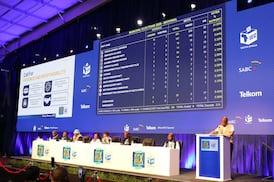
The Electoral Commission of South Africa (IEC) is expected to announce the final results once counting, verification and the objections process have been completed.
Business Day





Would you like to comment on this article?
Sign up (it's quick and free) or sign in now.
Please read our Comment Policy before commenting.