
I am not going to waste time outlining our unemployment problem, our economic stagnation problem or the remnants of our state incapacity problem. Rather, let me jump right in and say we need a Marshall Plan to rebuild the country.
The country needs rapid implementation of a game-changing set of projects that will set us on a new path. This plan should not be a grand, national policy such as the national development plan, bogged down in 400 pages of technocracy. Instead, it must be a clear, concise, bankable plan to quickly change the socioeconomic topology of the country in a drastic manner.
It must be about creating a new set of microeconomic dynamics that will dramatically shift our macroeconomics, long term. This should not be a plan to grow big business but to mobilise the rural and peri-urban millions who are waiting for a better future.
There are many bright young South Africans with good ideas on how we can improve the conditions of the people of our country — a wealth of talent and ingenuity waiting to be unlocked. So here are a few interrelated ideas that might go some way to creating the momentum we need to do so.
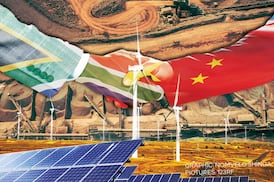
The department of trade and industry should convene a network of established solar power installers in each province, provide them with a schedule of every school, clinic and post office in SA, and invite them to bid for the installing of solar systems tailored to the needs of each institution.
We should set the goal, through the project, of having 100% of schools and clinics on renewable energy by December 2020. Long term, public institutions will become local energy sources instead of energy cost-centres.
The project should be hosted in a special purpose vehicle set up at the Development Bank of Southern Africa and not at Eskom, funded through the Jobs Fund and failed sector education and training authorities. It should be given oversight by local clergy and NGO practitioners as well as audit firms that have regional representation. These individuals must be precluded from direct participation in the project in transactional terms.
With the SA Post Office now stabilised, the higher education minister should call a bilateral meeting between its leadership and the council of Unisa and give the parties a mandate to co-create a one-year presidential national certificate in management and entrepreneurship. The programme must provide basic management and business principles, and be centred on innovation and customer-centricity.
The director-general of higher education should be instructed to fast-track the accreditation process in under six months, so that the programme is registered and be live online by January 2020.
In parallel, Vodacom and MTN should be invited to co-host an online platform for the registration and dissemination of the programme materials, both in PC and mobile formats, and to compete for the hosting of a public WiFi hotspot in each post office.
Once created, the organisers should roll out the programme on a national scale by allowing any South African aged from 15 to 30 to enrol free of charge. On enrolment, pupils must only be required to report to a local post office, present proof of identification and submit their biometric information. At each stage of the programme, the student should be invited to develop and submit a portion of a business plan, focused on local industry, for a potential SME that they consider to be viable in their region or town.
Then organised business should be invited to back the project by sending mid-career executives to present monthly masterclasses on marketing, strategy, finance and leadership as part of their corporate social investment, in the form of open evenings hosted in local schools. This will turn dormant infrastructure into places of learning one night a week and enhance the social capital between big business and local communities. It will give young people places to go at night where there are books and lights instead of alcohol and drugs.
Trade and industry minister Ebrahim Patel should create a policy that gives any global multinational manufacturer that employs and trains SA workers and uses raw materials sourced in SA in a manufacturing process locally, a 50-year exemption from black economic empowerment regulations. This will attract the two inputs our country desperately needs — intellectual capital and productive investment for job creation. By 2070, we would have created entire new industries and would have employed millions of South Africans in the process.
Importantly, these ideas do not have to cost the taxpayer much, if anything. In fact, the energy, skills and financial gains that would be created would lift our communities out of the morass of despair they are in. Importantly, it will also begin to change the trajectory of social dependence and entitlement that threatens the sustainability of the entire national project.
I’m certain we will find many South Africans eager to help to rebuild the country through projects such as these that provide vehicles for active citizenship.
• Oosthuizen is a member of faculty at the Gordon Institute of Business Science. He writes in his personal capacity.


Would you like to comment on this article?
Sign up (it's quick and free) or sign in now.
Please read our Comment Policy before commenting.