
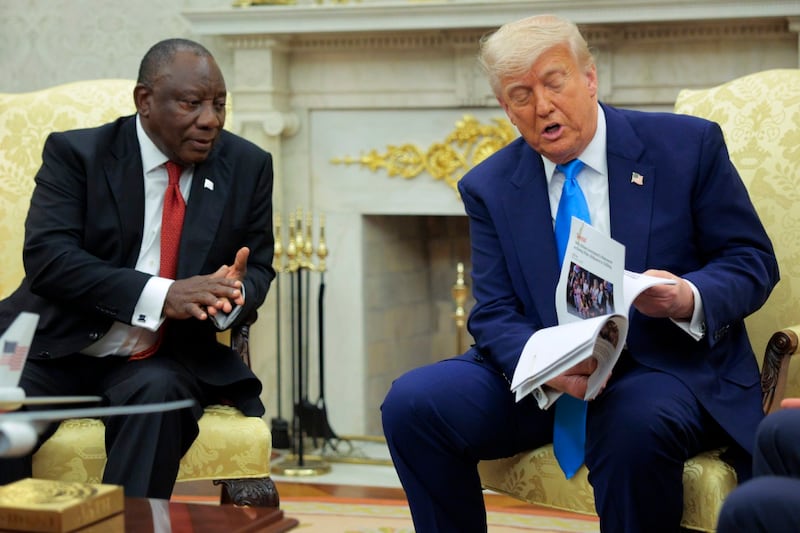
This week, after almost two years of escalating diplomatic spats, executive orders, ambushes and misinformation and disinformation campaigns, the relationship between South Africa and the US hit a wall. President Donald Trump finally announced that South Africa’s participation in the African Growth & Opportunity Act (Agoa) would be terminated at year-end.
The reasons cited by Trump for the decision include South Africa’s failure to establish a system to combat corruption and bribery; actions on matters of international security and relationships with governments of concern; and trade barriers that apparently continue to affect US trade and investment in South Africa.
Surprisingly, no mention was made of the often-cited allegations of genocide against white farmers that necessitated the creation of an exclusive refugee programme in 2025, or the requirement to abolish some domestic laws relating to expropriation and BEE.
The omission of such issues from the letter issued to President Cyril Ramaphosa, after a period in which they have been continuously cited as the dealbreakers that had to be resolved if diplomatic relations were to be normalised, is an unexpected development. What binds such issues together is that they existed in that complicated area where parameters of national sovereignty, bilateral relations and pragmatism intersect.
In demanding that South Africa abolish laws passed by its elected MPs, the US put the country’s leaders in a bind. If they accepted the demands, they would have to embark on a process of ushering in an omnibus of laws to replace the contentious ones. Anyone who understands the laborious lawmaking process in South Africa can appreciate that such a mission would be a matter of years rather than months.
If — as demanded by some — South Africa’s leaders decided to abolish a law that had been passed, they could either leave a vacuum as they embark on the consultation and drafting process required to pass a new law or rush it all through, only for the Constitutional Court to throw it all out for precisely that reason.
A question of sovereignty
Even if the processes were to follow the law, the question arises whether in the drafting of the revised laws the country would be expected to consult the US to ensure that whatever was passed did not still fall foul of American sentiments. The idea that any nation could have such a say in the affairs of another is antithetical to the idea of sovereign states having the right and autonomy to decide on policies and laws that are appropriate for the nation, rather than being an imposed policy framework from another nation.
The desire to maintain bilateral relations can translate to negotiated concessions, but once this gravitates towards a surrender of national policy and identity, the slope becomes slippery, especially when the demands are not anchored in principles. Even if South Africa had acceded to the demands, it is not clear if that would have been good enough to restore relations or, indeed, to maintain participation in Agoa.
The US administration has embarked on an insular agenda that has alienated foes and friends alike. Even when other nations have sought to appease the US and accede to its evolving demands, few long-term guarantees have materialised.
The amplified focus on South Africa owes a lot to the attitude of the right-wing elements of US politics and their ideological peers in South Africa. To expect South Africa to yield to the demands of a counterparty that changes the rules of engagement at every turn would result in a drift that would make engagement pointless.
While exclusion from Agoa will definitely bite, one wonders if there was ever actually a chance of avoiding this outcome.
• Sithole is an accountant, academic and activist.
Business Day






Would you like to comment on this article?
Sign up (it's quick and free) or sign in now.
Please read our Comment Policy before commenting.