
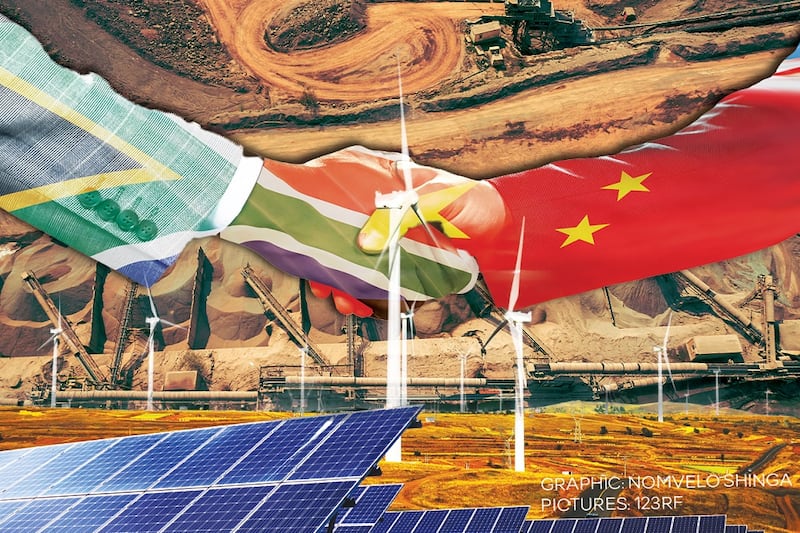
The US decision to terminate South Africa’s eligibility under the African Growth & Opportunity Act (Agoa) from January next year marks a major shift in external economic relations. Citing trade barriers, corruption and foreign policy concerns, Washington is ending more than two decades of preferential access for South African exporters.
Agoa has underpinned South Africa’s trade with the US since 2000, providing duty-free access for more than 1,800 products, including vehicles, agricultural products, wine, steel and manufactured goods. South Africa has been among its largest beneficiaries. Exclusion raises questions beyond immediate export losses: how should South Africa position its economy in a multipolar world?
Adjustment costs may accelerate the transition towards Asia, critical minerals and value-added beneficiation. The immediate impact will be uneven: higher tariffs on automotive manufacturing and components, citrus, wine, macadamia nuts and other agricultural exports threaten their competitiveness, local investment and employment in affected industries and regions.
The shock nevertheless requires perspective. The political importance of the programme has often exceeded its direct macroeconomic contribution. South Africa accounted for about $3.76bn of the $8bn in Agoa imports entering the US in 2024.
Following Stats SA’s rebasing exercise last month, the country’s GDP is now estimated at R8-trillion, some $486bn at the current exchange rate, meaning Agoa-supported exports amount to less than 1% of that economic base. That is important but insufficient to determine the economy’s trajectory.
This comparison offers perspective, not grounds for complacency. A small share of national output can still represent substantial exposure for specific exporters that are dependent on preferential access. Policy should therefore carefully distinguish the economy’s capacity to absorb the shock from adjustment pressures facing individual exporting businesses, without allowing either consideration to obscure the other entirely.
Trade with China
China has been South Africa’s largest trading partner since 2008. Bilateral trade exceeded $34bn in 2023 and continued expanding through to the present. South African exports to China were estimated at $13.5bn in 2025, more than three times Agoa-supported exports. These figures suggest that the country’s broader growth prospects increasingly involve Asian demand and critical minerals.
Since the advent of Agoa in 2000, expanding Asian industrial production, commodity demand and infrastructure investment have shifted the economic centre of gravity eastward. Chinese customs data put two-way trade at $37.8bn in the first seven months of this year: about $21bn in imports from South Africa and $16bn in exports to South Africa. Despite methodological differences between the countries’ statistics, the figures point to deepening interdependence as relations with Washington becoming less certain.
Institutional ties have also strengthened. In 2026, South Africa and China signed the Framework Agreement on Economic Partnership for Shared Prosperity, followed by China’s unilateral zero-tariff arrangement for qualifying South African exports. These initiatives expand market access and provide a platform for deeper trade and investment.
Exports to China remain resource-intensive, dominated by gold, platinum group metals (PGMs), chrome, manganese and iron ore. Precious metals and stones account for 58% of the export basket, while ferro-alloy inputs, particularly chrome and manganese ores, contribute close to 29%.
Against those exports, South Africa imported about $22.9bn from China in 2025. The imbalance exposes dependence on raw material exports but also demonstrates the strategic fit between China’s industrial demand and South Africa’s mineral wealth.
China’s leading electric vehicle, battery, renewable energy equipment, steel and advanced manufacturing industries require manganese, chrome, vanadium, iron ore, copper, nickel and PGMs. South Africa’s globally significant reserves make it relevant to this next phase of China’s industrial development.
Stats SA’s GDP rebasing reinforces mining’s importance. The revised economy is about 5% larger than previously estimated, and mining accounted for the largest upward revision at 12.5%, reflecting improved measurement and broader coverage rather than new production. Mining and trade together accounted for R122bn of the R324bn upward GDP revision, highlighting the previously underestimated footprint of resource-linked activity.
Technological change strengthens this significance. Renewable energy, battery storage, electric mobility, AI infrastructure and advanced defence technologies are driving demand for strategic minerals. Governments increasingly regard secure supplies as essential to economic sovereignty and national security.
South Africa holds some of the world’s largest reserves of PGMs, manganese, chromium and vanadium and remains a significant gold producer. The policy response to Agoa’s termination must therefore go beyond finding alternative markets.
South Africa should leverage its mineral endowment to move up global value chains, treating industrialisation, and not extraction alone, as the central challenge. Exporting raw or semi-processed minerals while importing higher-value manufactures has restricted domestic value capture, a model increasingly inadequate for the critical-minerals era.
Beneficiation imperative
Beneficiation is therefore an economic imperative. Expanding domestic refining, processing and manufacturing could shift exports from manganese and chrome ores and platinum concentrates towards battery materials, speciality alloys, catalytic technologies, hydrogen components and fuel cells, thus deepening industrial capacity and reducing exposure to commodity cycles.
China could provide capital and expertise in battery technology, renewable energy and mineral processing. Moving from resource exports to industrial collaboration could make South Africa–China relations a defining economic partnership of the next decade.
The strategic objective should not be to replace dependence on Washington with dependence on Beijing. Larger trade flows alone cannot guarantee industrial transformation if South Africa continues exporting minerals while importing the finished products. Partnerships should therefore be judged by their contribution to local processing, technological capability and access to markets for higher-value exports.
Chinese capital and expertise would be most valuable when they support these outcomes, alongside co-operation with other trading partners. This approach would make mineral wealth a basis for greater economic agency, rather than simply a source of commodity earnings vulnerable to external demand.
Green hydrogen illustrates the opportunity. South Africa’s solar and wind resources, combined with the PGMs that are central to many hydrogen technologies, offer strong advantages. Appropriate policy and investment could turn these into an export industry supporting clean energy manufacturing ecosystems.
Geopolitical competition over critical minerals also creates leverage. Demand from the US, China, the EU and other industrial powers could help South Africa cultivate diversified partnerships, attract investment, and develop domestic industry.
The bottom line is that Agoa’s termination is a serious sectoral setback but it need not define South Africa’s economic future. If the country succeeds in turning mineral wealth and diversified partnerships into domestic industrial capabilities, prosperity will depend less on preferences granted abroad than on value created at home.
• Dr Tshitereke, an honorary professor at Unisa’s Thabo Mbeki School of Public & International Affairs, is chief of staff at the mineral & petroleum resources ministry.
Business Day




Would you like to comment on this article?
Sign up (it's quick and free) or sign in now.
Please read our Comment Policy before commenting.