
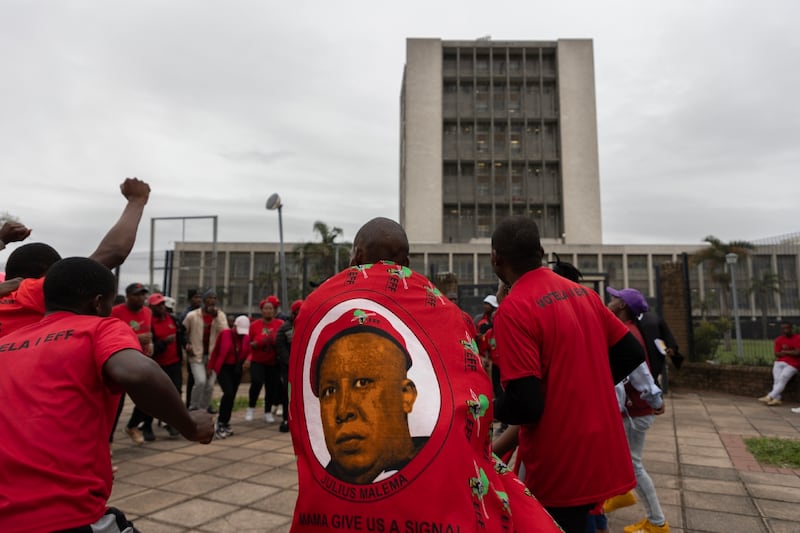
When US President Donald Trump confronted President Cyril Ramaphosa in 2025 over South Africa’s treatment of Afrikaners, Pretoria characterised the dispute as an attempt by an external power to interfere in its sovereign affairs and challenge the redress of apartheid.
But the contention did not begin with Trump. It rests on a question South Africa has spent three decades avoiding: can racial governance truly end while race remains the rule?
That is also the question underpinning “ANC-apartheid”, a term used by Dutch politician Martin Bosma in 2015 to describe what he saw as the ANC’s continued use of racial discrimination in post-apartheid South Africa. His argument was that the expansion of race-based legislation across employment, procurement and economic policy had replaced one form of racial governance with another while allowing an ANC political elite to consolidate power.
If the charge is that racial government survived apartheid, the first question is what racial government looked like under apartheid itself. The Population Registration Act of 1950 formally classified every South African by race, creating the legal categories on which much of the apartheid system depended. The Group Areas Act of 1950 then translated those classifications into geography, determining where different racial groups could live, own property and conduct business.
The Bantu Education Act of 1953 codified racial inequalities in education, establishing a separate system designed to prepare black South Africans for positions the apartheid state envisaged they would occupy within the economy. Together, these laws transformed race from a social distinction into an administrative principle governing people’s relationship with the state.
After mounting international pressure and growing recognition that apartheid could not be sustained, then-president FW de Klerk held a whites-only referendum in 1992, asking voters whether they supported continuing his reform process toward a negotiated constitution. Almost 69% voted “yes”, giving the transition a decisive mandate and in effect endorsing the dismantling of the political system that had privileged the white minority.
The 1996 constitution that followed, under the democratically elected dispensation, prohibited unfair discrimination while permitting measures to advance groups disadvantaged by apartheid, leading to the 1998 Employment Equity Act and the emergence of BEE policy. The white electorate had thus voted to end minority rule based on race, even as the democratic state retained race as a central pillar for addressing its legacy.
Once racial categories are embedded in legislation and compliance systems, institutions develop around them, creating a self-perpetuating bureaucracy and political constituency.
The expansion of employment equity illustrates this trap. Amendments signed by Ramaphosa introduced strict five-year numerical targets across 18 economic sectors, linking compliance to state contracts. This shifted policy from prohibiting discrimination to using race as a permanent administrative barrier to regulate employers and govern access to business opportunities.
Once racial categories are embedded in legislation and compliance systems, institutions develop around them, creating a self-perpetuating bureaucracy and political constituency.
The ANC’s racial redress framework served as the primary mechanism by which the state could be looted, providing the legal and ideological cover for corruption to fester. As documented by the Zondo commission of inquiry into state capture, Gupta family-linked syndicates actively weaponised BEE compliance and politically connected partnerships to secure lucrative government contracts under the banner of transformation.
By hollowing out meritocratic oversight in favour of racial gatekeeping the state built structural loopholes that crippled public procurement and reduced it to an instrument of private plunder — an institutional collapse Ramaphosa himself ultimately described as an assault on democracy.
The parallels are not limited to the economy. By consistently defending the Dubul’ ibhunu (Kill the Boer) chant, ANC leaders have lent the full weight of their political capital to the marginalisation of South Africa’s Afrikaner minority and their culture. The nation’s highest judges became similarly complicit when the Constitutional Court cleared the chant, making use of strained legal definitions of “metaphor” to insulate a targeted threat from the country’s hate speech laws.
Afrikaners did not begin in 1948 or disappear in 1994. Their language, institutions and political identity developed over centuries. While the 1992 referendum in effect relinquished white minority rule, foregoing political power does not render a historically rooted population foreign. Yet under ANC-apartheid their minority status has been structurally undermined.
By codifying racial discrimination in the economy and condoning an explicit call to violence against them, the state has signalled that they exist outside the bounds of equal constitutional protection.
• Kajee is a lecturer at Southern Utah University, a nonresident research fellow at the Korea Institute for Maritime Strategy, and a researcher for the SeaLight maritime transparency initiative at Stanford University’s Gordian Knot Centre for National Security Innovation.






Would you like to comment on this article?
Sign up (it's quick and free) or sign in now.
Please read our Comment Policy before commenting.