


South Africa’s economic transformation policies have not delivered inclusive economic growth, despite being part of legislation for decades.
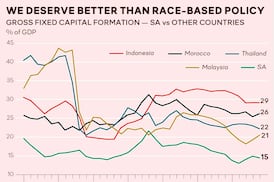
The country’s post-2009 growth trajectory — persistently below 2% annually — has intensified debate about whether transformation and growth are being advanced together or are increasingly in tension.
Despite the enormous resources spent on compliance and accreditation, little is known about the impact of broad-based BEE over the past 23 years because compliance data is not publicly available.
The government’s unwillingness to publish the data means there is no authoritative research that quantifies compliance costs or assesses the firm and macroeconomic impacts of these requirements. So, we ran a survey to understand how firms view the costs and benefits of broad-based BEE regulations.

Our sample covers 126 firms, covering both small, single owner businesses and large enterprises with revenue exceeding R1bn. More than a third of these firms chose to be noncompliant, or level 8, because owners disagreed with broad-based BEE regulations, believed the policy was not applicable to them, their firm was too small, the policy was too costly to comply with or would hold no benefits.
The costs firms bear to establish their initial broad-based BEE strategy and structures varies greatly across companies. Some companies face no compliance costs. For example, if the firm’s founders are black and the firm is small, then there may be no set-up, advisory and initial accreditation fees payable.
However, our survey shows that the initial setup costs the median firm in each compliance category in our sample report faces range at R160,000-R650,000 in 2025 rand terms, with an ongoing annual cost thereafter of R225,000-R2.5m a year, depending on turnover and specific compliance choices.
These costs are significant. In terms of setup costs, the median ratio of these costs to annual turnover range at 0.4%-4%. Annual compliance costs also vary a lot across firms.
However, our survey shows that the initial setup costs the median firm in each compliance category in our sample report faces range at R160,000-R650,000 in 2025 rand terms, with an ongoing annual cost thereafter of R225,000-R2.5m a year, depending on turnover and specific compliance choices.
The median firm in our survey that faced compliance costs reported annual scorecard (things such as skills development, enterprise and supplier development, socioeconomic development or vendor financing) and accreditation costs (including internal administration and staff time, systems and software, external verification and accreditation fees, legal and valuation fees, any other broad-based BEE advisory or accreditation costs) of more than R2.5m at level 1, R225,000 at level 2, R600,000 for levels 3 and 4, and almost R1m a year for levels 5 and 6.
This ranges at 1%-1.5% of annual turnover and 6.25%-32% of net profit after tax across firms of different levels of accreditation that face these compliance costs by seeking accreditation.
When considering the impact of regulations it is important to consider not only their costs but also their potential benefits. It is possible that the broad-based BEE regulations create growth opportunities for compliant firms and support job creation and investment. However, a high proportion of firms that responded to our survey do not report such benefits.
When asked if it would be commercially beneficial to raise their company’s broad-based BEE level, more than two thirds of firms did not see a benefit from improving their scores. We also asked firms what they thought would happen if their scores fell one level, and only 25% of firms expected revenues to fall while fewer than one in five firms expected any revenue benefits from a one level increase in the score.
Do firms think the broad-based BEE regulations support employment? No. Only 4% of firms report that it has increased net employment and 35% report lower net employment.
What about investment? Almost 50% of firms report reduced reinvestment and more than 40% report having reduced new investment as a consequence of BEE regulations, compared with 4% reporting increased reinvestment and less than 2% reporting increased new investments.
Do firms think the broad-based BEE regulations support employment? No. Only 4% of firms report that it has increased net employment and 35% report lower net employment.
The survey shows that these compliance costs act as stealth taxes that strongly disincentivise firm start-up or growth if the company is small and the founders are not black. The microeconomic costs of these regulations are particularly high for firms that approach the R10m revenue or 50 employee thresholds.
Our estimates suggest that compliance costs are so large as to make compliance either infeasible or economically irrational if shareholders are not black. While phased share allocations or staged broad-based BEE investments could provide some offset, these regulations have ongoing impacts on firms’ cash positions and ability to accumulate retained earnings for growth.
We observe this in the data: the average formal business in South Africa has declined in size by more than 80% since democracy. Discouraging growth weighs on productivity and efficiency by reducing economies of scale and inhibiting job creation. This is the opposite of what South Africa needs to drive faster and more inclusive economic growth.
It is also no surprise that there has been an 87% decline in the value of broad-based BEE transactions over the past six years. If these transactions yielded ongoing value to shareholders we would see an increase in broad-based BEE transactions over time. Instead, we show that several high-profile JSE empowerment share schemes trade at discounts exceeding 50%. This represents a direct and measurable transfer of wealth away from the black South Africans the policy is designed to benefit.
The amendments to the broad-based BEE framework that are moving through the legislative pipeline assume that further raising the effective tax that compliance implies and forcing compliance will see firms invest and employ more. South Africa’s experience to date suggests that these amendments will achieve the opposite.
• MacKay is CEO of XA Global Trade Advisors. Steenkamp is CEO of Codera Analytics and a research fellow with the Economics Department at Stellenbosch University.






Would you like to comment on this article?
Sign up (it's quick and free) or sign in now.
Please read our Comment Policy before commenting.